Post by: Feed Poster on August 20, 2025, 10:02:26 AM
A few years ago, our managing editor, Allison Parker, wrote an endearing story called "A Girl and Her Honda Rebel" about her first bike, a Honda Rebel 250. That story elicited a lot of feedback from readers, many of whom have fond memories of learning to ride on a Rebel, their gateway drug into the wonderful world of two wheels.
Like thousands of others – the Rebel 250 debuted in 1985 and various versions have been built by the boatload over the past 40 years – I also learned to ride on a Honda Rebel. I bought my first motorcycle, a used Yamaha FZ750 sportbike, in the late '90s when I was in grad school, but I didn't know how to ride. Foolishly, I wobbled around the alley streets of Philadelphia, and I managed to keep the bike upright when I rode it down to the Navy Yard for my MSF class. I'd park the FZ750, hop on one of the many Rebel 250s that made up the training fleet, and work my way through the parking lot exercises. At the end of class, I'd ride home with a few more skills in my quiver.
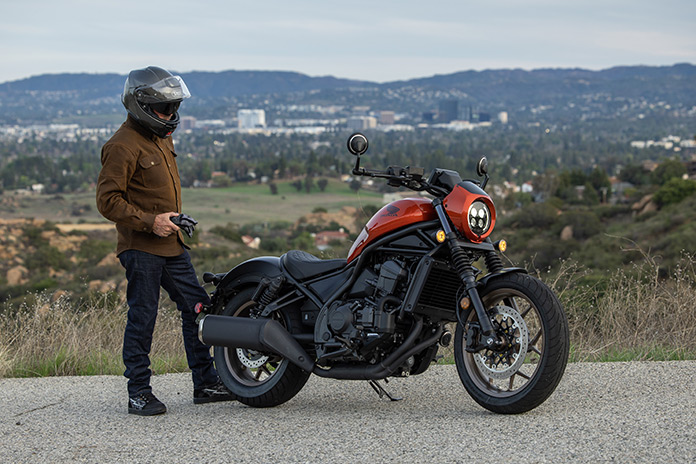
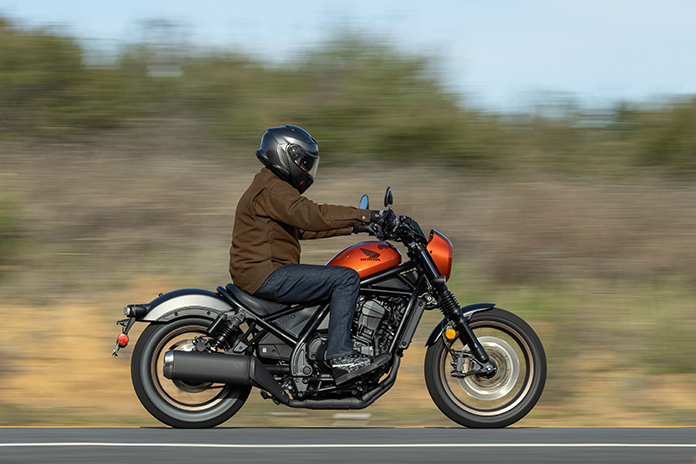
GEAR UP: Honda Rebel 1100 DCT SE
- Helmet: Shoei Neotec 3
- Jacket: Cortech Rambler Jacket
- Gloves: Cortech Sport Lite Gloves
- Pants: Cortech AA Dyneema Riding Jeans
- Boots: Cortech Slayer Canvas Skulls Riding Shoes
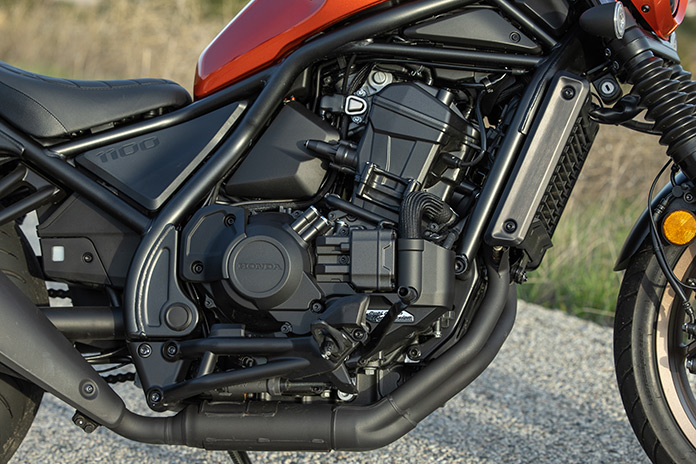
These days, Rebels come in three sizes: 300, 500, and 1100. The Rebel 1100 was introduced in 2021, and its 1,083cc Unicam parallel-Twin is shared with the Africa Twin adventure bike and the new NT1100 DCT sport-tourer. Using the same engine platform across multiple models allows manufacturers to spread the considerable expense of engine development over a larger number of units. A few tweaks, some electronic tuning, and a new exhaust are all it takes to tailor the engine's character to a model's particular application.
In the case of the Rebel, the engine revs less aggressively than the Africa Twin and NT1100 DCT thanks to a heavier flywheel. Unique valve timing, valve lift, and volumetric efficiency between the cylinders contribute to the pulse feeling of the 270-degree crank. A dedicated air cleaner, exhaust system, and muffler further set the Rebel apart from its stablemates.
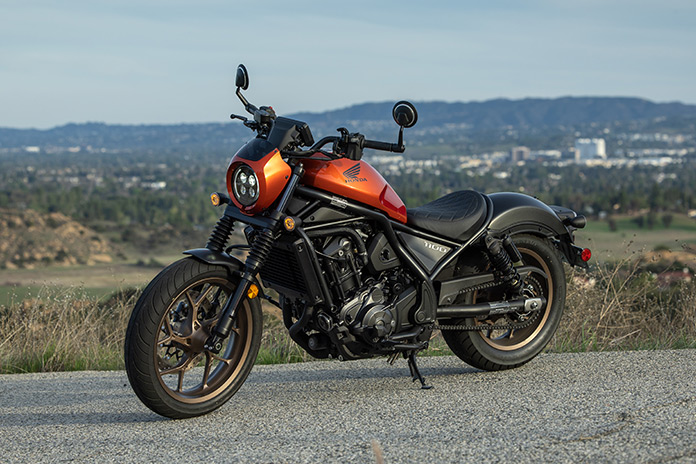
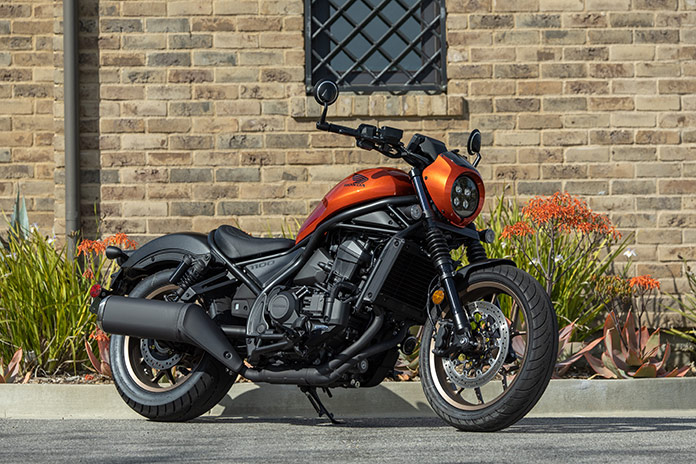
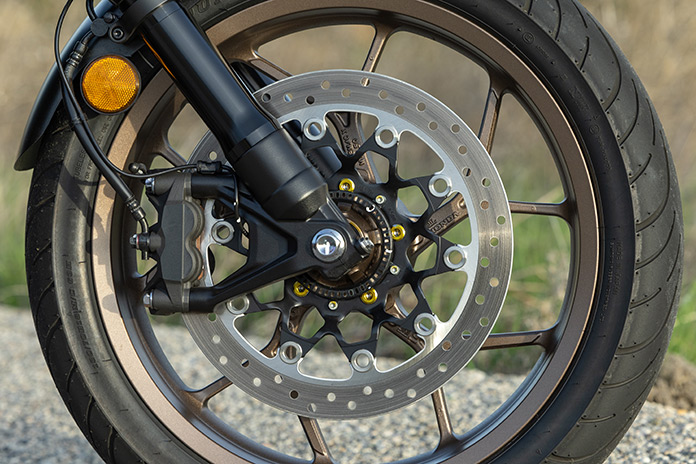
The Rebel 1100 lineup has expanded over the past few years. There's the standard model with a 6-speed manual transmission ($9,599), the DCT model with a 6-speed automatic Dual Clutch Transmission ($10,299), and the new-for-2025 DCT SE model tested here ($11,099), which adds a custom seat, bar-end mirrors, a headlight cowl, fork boots, a bobbed front fender, and bronze wheels rather than the black hoops on the other models. The DCT SE also comes in a fetching Flare Orange Metallic color (the other models are available in Pearl Hawkeye Blue or Matte Black Metallic).
If you're a bagger fan, there's also standard ($10,799) and DCT ($11,499) versions of the Rebel 1100T, which includes top-loading lockable hard saddlebags and a batwing-style fairing with a shorty windscreen. Allison tested the Rebel 1100T DCT in 2023.
All Rebel 1100s received some updates for 2025. Their seats – which are solo on all models; a passenger seat and footpegs are available as accessories – have foam that is 0.4 inch thicker for more comfort. The seating position was also revised, moving the handlebar up by 0.5 inch and closer to the rider by 1.1 inches, and moving the footpegs 2 inches farther forward.
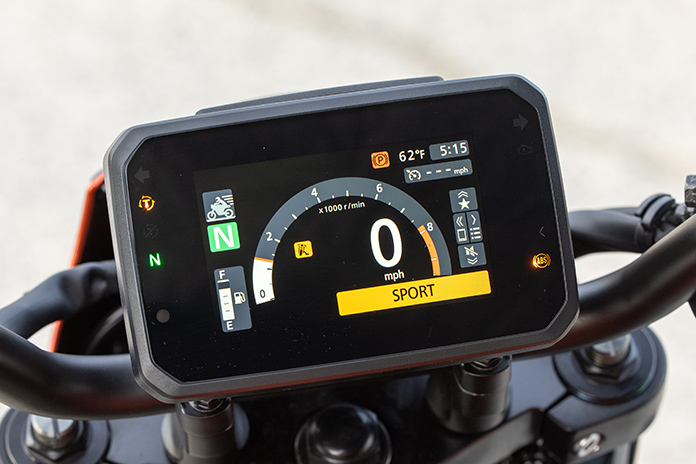
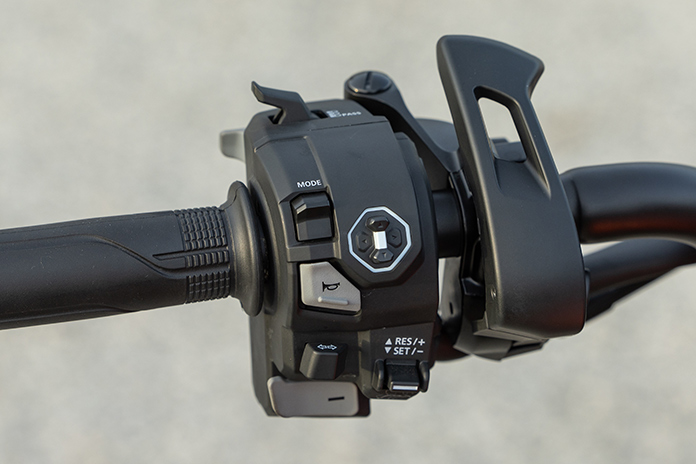
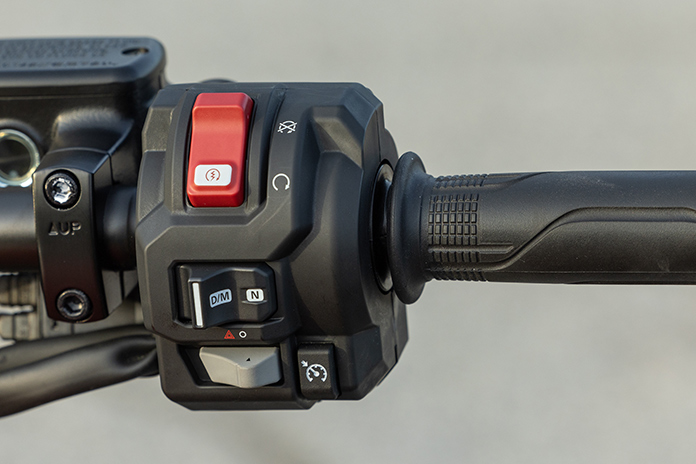
Rebel 1100s also feature a new 5.5-inch TFT display that replaces the previous monochrome LCD. They're also equipped with Honda's new RoadSync system, which is compatible with Apple iOS and Android and connects the bike to the Honda RoadSync app to enable navigation, music, weather, and other functions. There's also a new USB socket near the handlebar, and cruise control is standard.
We've all heard the saying, "If it looks like a duck, walks like a duck, and quacks like a duck, then it's probably a duck." (According to one of the villagers in Monty Python and the Holy Grail, "If she weighs the same as a duck, she's made of wood...[and therefore]...a witch!" but let's not get distracted.) The Rebel 1100 certainly looks like a cruiser, but it doesn't ride like a cruiser or feel like a cruiser.
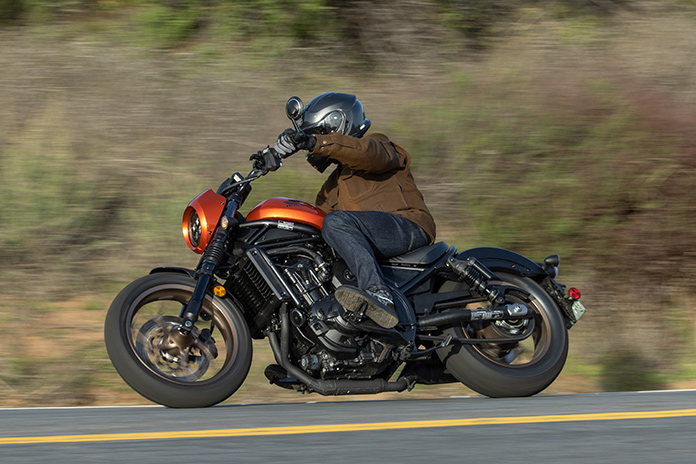
The Rebel's 1,083cc parallel-Twin, rated at 81 hp at 7,000 rpm and 68 lb-ft of torque at 5,000 rpm at the crank, is the first indication that this isn't a traditional cruiser. The engine likes to be revved, and its character (in the form of throttle response, traction control, wheelie control, engine braking, and DCT shift timing) can be altered by selecting different ride modes: Standard, Sport, Rain, and User (customizable).
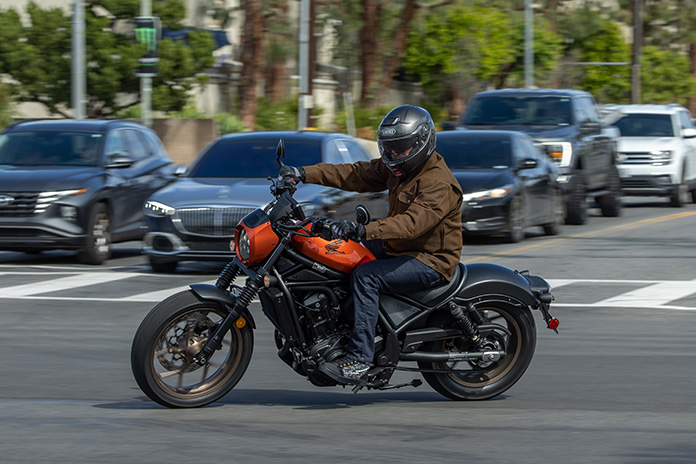
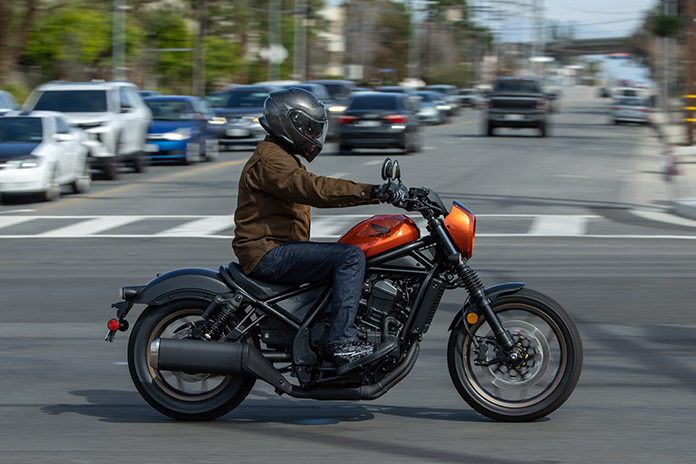
The Rebel 1100 is more comfortable than many cruisers on the market. The plush seat is perched a very approachable 27.5 inches off the deck, and the feet-forward riding position doesn't fold the rider into the classic cruiser "clamshell" because the bike isn't stretched out and the repositioned handlebar is within easy reach. However, since the engine hangs low from the tubular-steel frame, the footpegs are located on either side of the cases, attached to cantilever brackets that extend forward from the frame. The pegs are far apart, and for a tall guy like me with a 34-inch inseam, they put my ankles at an awkward angle, and my right foot always seemed to be resting on the brake pedal.
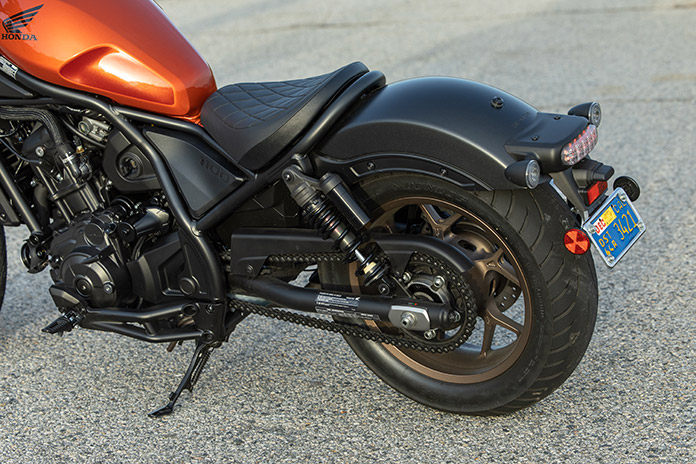
Befitting a cruiser, the Rebel 1100 has dual piggyback reservoir shocks. Their 3.7 inches of rear suspension travel, while not what you'd call generous, exceeds that of some other midsized cruisers, such as 3.0 inches on the Indian Scout and 3.2 inches on the Harley-Davidson Sportster S. There's enough stroke to absorb most of the cracks, dips, and divots that are so common on California's deferred-maintenance roadways, but as with most cruisers, effort is required to raise one's keister out of the saddle to avoid the jarring impacts of potholes and gravity cavities. The 43mm fork offers 5.5 inches of travel, and the only adjustment front and rear is spring preload. Damping qualities are good, delivering a comfortable, responsive ride.
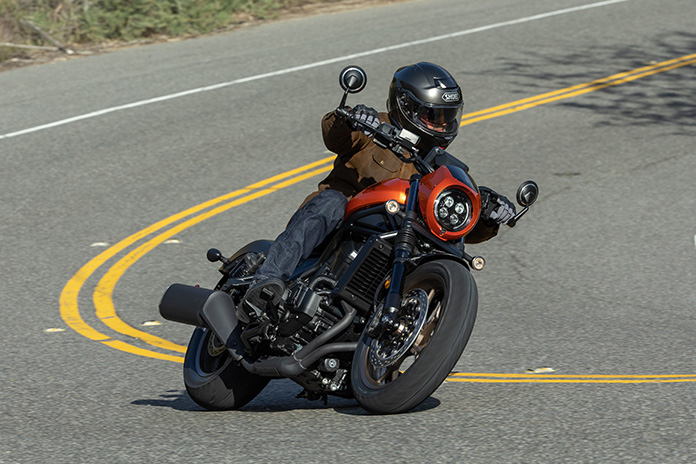
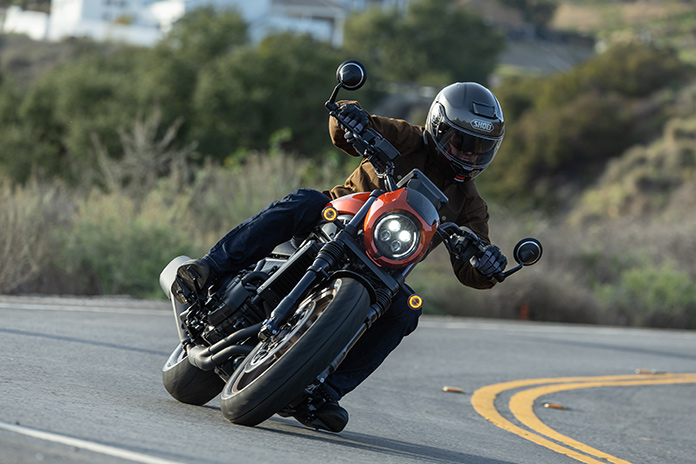
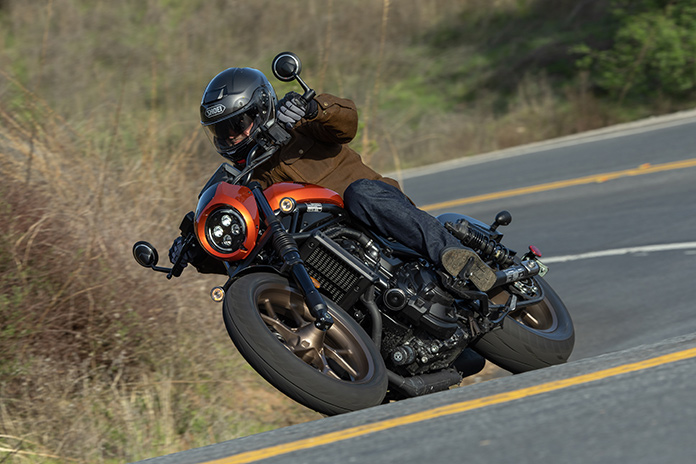
The Rebel 1100 rolls on cast wheels, 18 inches in front and 16 inches out back, with Dunlop D428 tires that deliver good grip and handling. Given its sporty engine and modest weight (509 lb ready to ride), the Rebel is more than willing to attack corners. In fact, it encourages the rider to do so. The wide handlebar and slim profile lend themselves to fast transitions, and the bike feels rock solid at lean. The only limit is cornering clearance; in tight corners, boot heels will scrape pavement.
A single 4-piston monoblock radial caliper pinching a 330mm floating disc up front and a single 1-piston caliper with a 256mm disc out back handle braking duties with good power and modulation, and ABS adds a safety net when you need it.
No, the Rebel 1100 DCT SE is not your typical cruiser. It has a parallel-Twin instead of a V-Twin. It has an automatic Dual Clutch Transmission rather than a 6-speed manual. It can cruise, but it would rather hustle. The metric cruiser world is a lot smaller than it used to be, and a bike like the Rebel 1100 DCT SE occupies a unique niche. It's for those who don't want to ride the same cruiser as their neighbor or everyone at their local coffee shop or bike night. It's the un-cruiser, and it's a heckuva lot of fun.
Check out more new bikes in Rider's 2025 Motorcycle Buyers Guide
2025 Honda Rebel 1100 DCT SE Specs
- Base Price: $11,099
- Website: Powersports.Honda.com
- Warranty: 1 yr., unltd. miles
- Engine Type: Liquid-cooled, transverse parallel-Twin, Unicam SOHC w/ 4 valves per cyl.
- Displacement: 1,083cc
- Bore x Stroke: 92.0 x 81.5mm
- Horsepower: 81 hp @ 7,000 rpm (factory claim)
- Torque: 68 lb-ft @ 5,000 rpm (factory claim)
- Transmission: 6-speed, automatic Dual Clutch Transmission
- Final Drive: Chain
- Wheelbase: 59.8 in.
- Rake/Trail: 28 degrees/4.3 in.
- Seat Height: 27.5 in.
- Wet Weight: 509 lb (factory claim)
- Fuel Capacity: 3.6 gal.
- Fuel Consumption: 39 mpg
- Estimated Range: 140 miles
The post 2025 Honda Rebel 1100 DCT SE Review appeared first on Rider Magazine.
Source: 2025 Honda Rebel 1100 DCT SE Review (https://ridermagazine.com/2025/08/19/2025-honda-rebel-1100-dct-se-review/)
Courtesy of Rider Magazine - http://ridermagazine.com